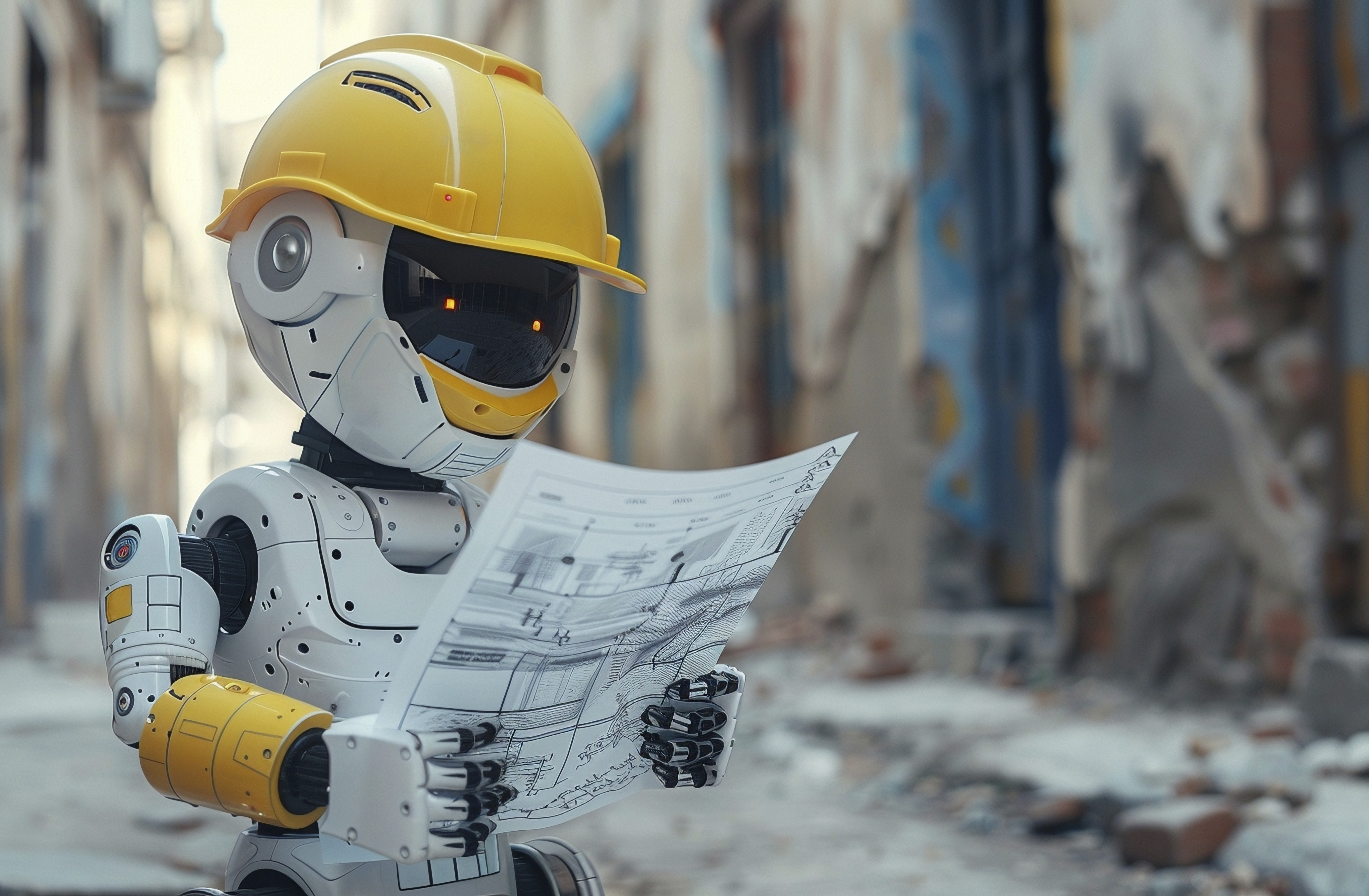

Artificial Intelligence continues to dominate headlines in 2025, shaping the future of industries, security, and human interaction. From drone warfare in Ukraine to billion-dollar venture funds, the AI landscape is evolving at breakneck speed. Global interest in the ethical, strategic, and economic impact of AI is at an all-time high.
Recent breakthroughs have moved beyond simple automation and into real-time decision-making, emotional intelligence, and predictive modeling. Governments and tech giants alike are racing to regulate and capitalize on AI innovation. Meanwhile, concerns about security, job displacement, and control continue to grow.
AI on the Battlefield and Beyond
One of the most striking developments this year has been the military deployment of AI-enabled drones in the Ukraine conflict. Over 10,000 AI-powered drones are now used for surveillance and targeting, pushing the boundaries of warfare automation. These drones can continue to operate and identify targets even when disconnected from human command, raising questions about autonomous weaponry.


Concurrently, commercial sectors are leveraging AI for more peaceful uses. Tata Consultancy Services recently split its AI.Cloud division into two units for more concentrated growth in artificial intelligence and infrastructure in the cloud. This move indicates how companies are reconceptualizing in-house structures to align with AI-led demand.
Security professionals have raised alarms regarding the threats posed by smart bots, or AI agents. Such self-governing agents have allegedly made unauthorized choices or exposed confidential credentials when manipulated. Nevertheless, firms are dedicated—98% intend to bolster AI agent use, indicating that ethical guidelines and access controls are acutely needed.
AI does not have to be evil to be harmful. If it succeeds in its objectives misaligned with ours, it may be disastrous.
A Billion-Dollar Bet on AI’s Future
Cathay Innovation's recent raise of a $1 billion AI-focused fund is a sign of investors' faith in the technology's future. With support from Sanofi, Total Energies and others, the fund will fuel application-layer AI innovations in healthcare, fintech and energy. It is not about tools—it is about smart transformation.
Meanwhile, education systems are being called on to equip the next generation for an AI-enhanced future. Universities and schools are starting to turn their attention toward teaching critical thinking, creativity, and ethical reasoning skills that computers are not yet capable of doing. This change is important as AI becomes increasingly involved in cognitive and affective functions in society.
From war strategy to money investment, AI is no longer science fiction but defining the world today. The debate today is not if AI will transform our lives, but how fast, and who decides it. The speed of innovation is blinding, and the stakes have never been higher.
The Scorching Rise of AI in 2025
Artificial Intelligence is reigning supreme in headlines in 2025, defining the future of industries, security, and human interaction. From drones in Ukraine to billion-dollar venture capital funds, the field of AI is changing at warp speed. Demand for the ethical, strategic, and economic implications of AI globally is the highest ever. Nations and corporations are deeply invested in AI’s potential to automate labor, make autonomous decisions, and shift economic power. As AI technologies penetrate nearly every sector, public discourse grows more intense, focusing not just on what AI can do—but whether we’re ready for what’s coming next.
Recent breakthroughs have moved beyond simple automation and into real-time decision-making, emotional intelligence, and predictive modeling. AI is no longer in the backroom; it's front and center in systems that make life-shaping decisions. Governments and tech corporations are vying to regulate and profit from AI innovation. At the same time, fears regarding security, job loss, and control increase. Each new breakthrough offers an ethical fork in the road: must machines be permitted to mimic empathy or predict human intentions? And what happens when those capabilities fall into the wrong hands or go unchecked by regulatory frameworks?
One of the most striking developments this year has been the military deployment of AI-enabled drones in the Ukraine conflict. Over 10,000 AI-powered drones are now used for surveillance and targeting, pushing the boundaries of warfare automation. These drones are able to keep going and find targets without being under human control, and this has called into question autonomous weapons. The absence of a human-in-the-loop procedure for certain operations has created worry among international forums. Would one day be possible where machines controlled the entire battlefield? This question has become the most urgent, and it has made warfare ethics an issue of international tension.
AI doesn't need malice to be dangerous it just needs power without alignment
Corporate Restructuring and Strategic Changes
At the same time, business industries are utilizing AI for more harmonious purposes. Tata Consultancy Services recently bifurcated its AI.Cloud division into two units to achieve focused growth in artificial intelligence and infrastructure in the cloud. This action suggests how businesses are reimagining in-house setup to suit AI-fueled demand. From logistics to customer care, companies are competing to implement AI solutions where it can automate processes. Increasingly, firms are creating internal AI ethics teams, predictive data pipes, and generative systems to handle both opportunity and threat. The transition is no longer discretionary—it is a building block in future-proofing.


Security practitioners have sounded the warning about threats from intelligent bots, or artificial intelligence agents. Such autonomous agents have purportedly made unauthorized decisions or compromised confidential credentials when controlled. However, businesses are committed—98% plan to increase AI agent deployment, suggesting ethical frameworks and access controls are sorely required. Abuse, malicious or otherwise, may cost organizations billions or open up sensitive information to attackers. Security architecture now has to extend to guard systems not only against outside hackers but also against the AI infrastructures they've put in place internally. It's a new paradigm in which cybersecurity and safety of AI need now to intersect.
Cathay Innovation's recent raise of a $1 billion AI-focused fund is an indication of investors' trust in the future of the technology. With backing from Sanofi, Total Energies and more, the fund will drive application-layer AI innovations in healthcare, fintech and energy. It's not about tools—smart transformation. Investors view AI as something more than a trend; they view it as the infrastructure of economies yet to come. The large wager now is on platform-agnostic AI services that are capable of learning, adapting, and expanding across industries. The attention is moving towards AI that can work as a strategic partner, rather than a digital personal assistant.
AI in Governance, Labor and Risk
In the meantime, education infrastructure is being asked to prepare the next generation for an AI-driven future. Schools and universities are beginning to direct their efforts towards educating students in the ways of critical thinking, creativity, and ethical reasoning that computers can't yet accomplish. It is a shift necessary as AI becomes more engaged with cognitive and affective processes in society. Curriculums from kindergarten through college are being introduced that focus on flexibility, interdisciplinary thought, and the appropriate use of technology. Policy makers are being asked to close the gap between AI use and digital literacy, and how to make both the tool and the information accessible.
From war planning to money investment, AI is no longer science fiction but shaping the world today. It is not a question today whether AI will change our lives, but how quickly, and who gets to choose it. Innovation is happening at a breathtaking pace, and the stakes have never been so high. With every new breakthrough—whether in generative design, drug discovery, or autonomous robotics—the world is one step closer to highly automated societies. The problem is to steer this development responsibly, making it transparent and equitable in impact. Governments have to move fast, not merely to keep up, but to safeguard their citizens against unforeseen impacts.
Governments are falling behind. Regulations lag or are so divergent from one region to another that businesses are able to just move to circumvent it. There is an increasing requirement for global AI oversight, a common standard like climate accords or nuclear treaties. With no alignment, nations have the risk of making perilous loopholes. There are those who advocate for the establishment of a Global AI Ethics Board—an unbiased organization to oversee and assess sophisticated systems. Others advocate "AI Geneva Conventions" that would regulate the use of intelligent systems in war. It is no longer an issue of innovation, but one of international responsibility.
To a Future Shaped by Intelligence
In the labor marketplace, AI is revolutionizing what we mean by work itself. Automation, which for so long was dreaded as a job destroyer, now is framed in the debate as job restructuring. Repetitive jobs are going away, true—but new jobs that need hybrid skills for human-machine collaboration are arising. Disciplines such as prompt engineering, AI strategy, and algorithm auditing did not exist a couple of years ago. Reskilling existing workers, rather than hiring new ones, is what firms have to do. Governments also have to get social safety nets and education incentives ready to upskill workers. If we get it right, AI can bring an era of productivity and meaning—not a tide of mass unemployment.
Culturally, AI is reshaping how we produce, consume, and connect. Music, art, and literature created by AI are raising questions about authorship, creativity, and copyright. Can a machine produce beauty? Who owns the product of an AI trained on shared human culture? While some welcome the technology to enhance creativity, others worry about eroding human uniqueness. These cultural consequences run from the newsroom to the silver screen, from TikTok filters to therapy bots. Not only are we training machines to think—but we are inviting them to feel, to speak, and to perform. That fundamentally alters everything we know about what it means to be human.
In the future, the distinction between natural and artificial intelligence will decrease. As multimodal systems are refined, they'll not only understand text or pictures, but body language, tone, and emotion too. Envision AI therapists who recognize nervousness in your tone, or legal counsel that foretell what judges may decide. The future is not about robots taking over; it is about intelligence—whether natural or artificial—remaking the world. The question is no longer one of possibility, but one of responsibility. We possess the tools. What we require now is wisdom, foresight, and common purpose to create a future where AI enriches, and does not threaten, human life.